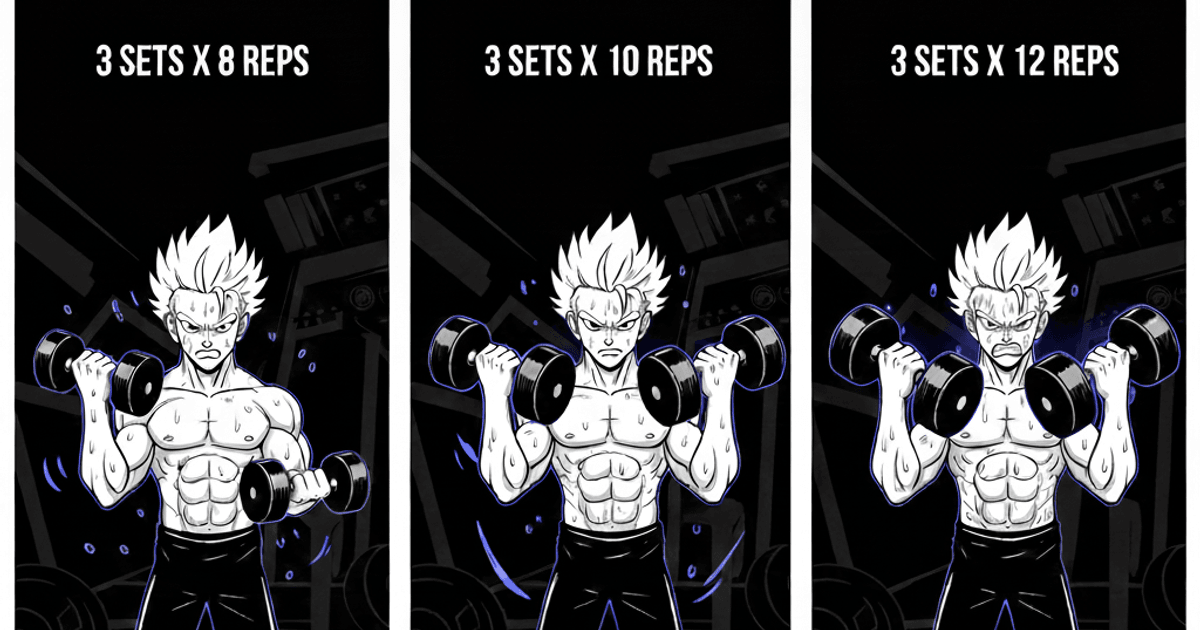
If there’s one concept that separates lifters who make progress from those who spin their wheels, it’s progressive overload. Yet despite being the most important principle in strength training, it’s often the most misunderstood.
Let’s break down the science and, more importantly, how to actually apply it.
What Is Progressive Overload?
Progressive overload is the gradual increase of stress placed on the body during training. This stress forces your muscles to adapt by becoming stronger and larger.
The principle was first scientifically documented by Thomas Delorme in the 1940s when he used it to rehabilitate World War II soldiers. Since then, it’s been validated by countless studies as the primary driver of muscle hypertrophy.
The Science Behind Muscle Growth
When you lift weights, you create microscopic damage to your muscle fibers. This damage triggers a repair process that, given adequate nutrition and rest, results in muscle fibers that are slightly larger and stronger than before.
This adaptation is your body’s way of preparing for similar stress in the future. But here’s the key insight: once your body has adapted to a given stimulus, that same stimulus no longer triggers growth.
This is why the person who’s been lifting the same weight for months sees no changes. Their body has already adapted. There’s no reason for it to grow further.
The Three Types of Progressive Overload
1. Load Progression
The most obvious form of progressive overload is adding weight to the bar. If you bench pressed 135 lbs last week and bench 140 lbs this week, you’ve applied progressive overload through increased load.
Pros: Simple to track, directly correlates with strength gains.
Cons: Can’t be applied indefinitely. Eventually, adding weight becomes impossible or leads to form breakdown.
2. Volume Progression
Volume is sets × reps × weight. You can increase volume by adding more sets or reps while keeping the weight the same.
Example: Going from 3 sets of 8 reps to 3 sets of 10 reps with the same weight is progressive overload.
Pros: Allows for continued progression when load increases stall.
Cons: More volume means more time in the gym and increased recovery demands.
3. Density Progression
Density refers to how much work you do in a given time period. Decreasing rest times or performing more work in the same workout duration are forms of density progression.
Pros: Time-efficient way to increase difficulty.
Cons: Can impact the quality of individual sets if taken too far.
Why Most People Get Progressive Overload Wrong
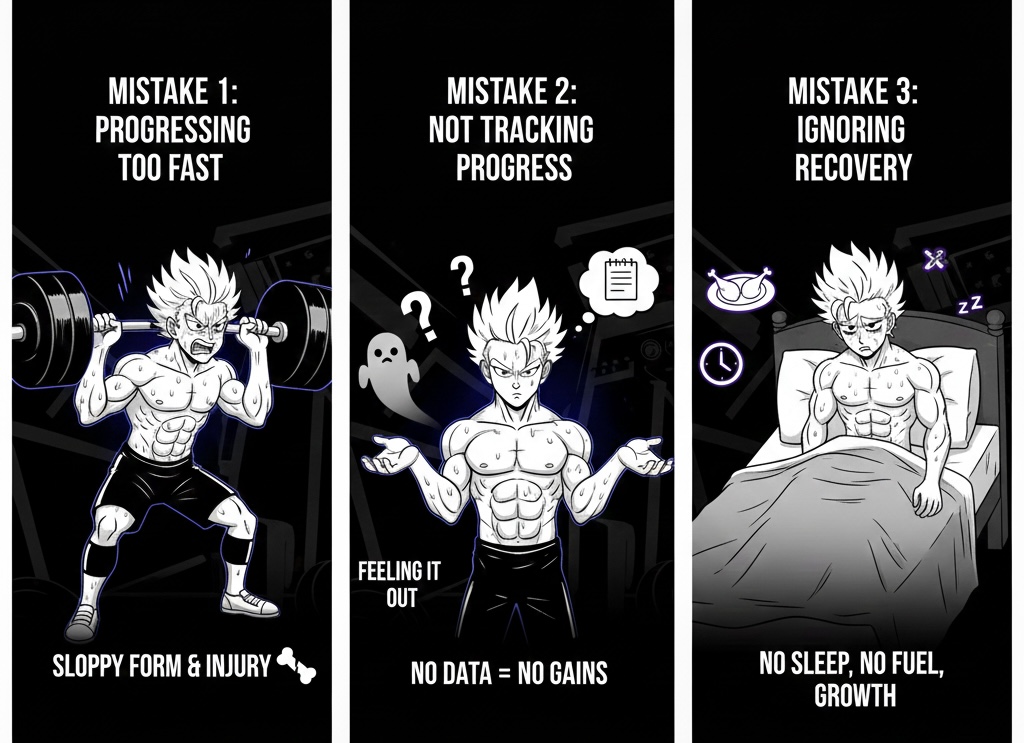
Mistake 1: Progressing Too Fast
Ego is the enemy of progression. Adding weight before you’re ready leads to form breakdown, reduced range of motion, and eventually injury.
The research is clear: controlled progression with proper form builds more muscle than sloppy progression with heavy weight.
Mistake 2: Not Tracking Progress
You can’t manage what you don’t measure. If you’re not tracking your weights, sets, and reps, you have no idea if you’re actually progressing.
Going to the gym and “feeling it out” is a recipe for stagnation. Your perception of effort is not reliable.
Mistake 3: Ignoring Recovery
Progressive overload doesn’t happen during the workout. It happens during recovery. If you’re not sleeping enough, not eating enough protein, or not taking rest days, your muscles can’t adapt to the stress you’re applying.
For hard gainers especially, recovery is often the limiting factor.
The Double Progression Method
One of the most effective ways to implement progressive overload is the double progression method. Here’s how it works:
- Set a rep range (e.g., 8-12 reps)
- Use a weight where you can complete the minimum reps (8)
- Each session, try to add reps while maintaining form
- Once you hit the top of the range (12 reps) for all sets, increase the weight
- Start the cycle again at the minimum reps with the new weight
This method provides clear criteria for when to progress and prevents the ego-driven weight jumps that lead to problems.
How Keelow Approaches Progressive Overload
Traditional gym notebooks and generic apps put the burden of progression decisions on you. Keelow takes a different approach.
By analyzing your performance data across sessions, Keelow identifies patterns in your progression and provides personalized recommendations for when to increase weight, when to add reps, and when to hold steady.
The algorithm accounts for:
- Your individual rep-to-rep performance
- Session-to-session trends
- Recovery indicators
- Historical progression rates
This removes the guesswork and ensures you’re always applying the right amount of progressive overload, not too much, not too little.
The Bottom Line
Progressive overload is not optional. It’s the fundamental requirement for muscle growth. But applying it effectively requires:
- Tracking your performance accurately
- Progressing systematically rather than randomly
- Prioritizing form over ego
- Recovering adequately between sessions
Master progressive overload, and you’ve mastered the most important skill in building muscle. Everything else is just details.